100 Prompts For Website Designers: Unlocking AI Creativity
The blank canvas is the hardest part of web design. 100 AI prompts to spark on-brand layouts, copy, and UX — without outsourcing your taste.
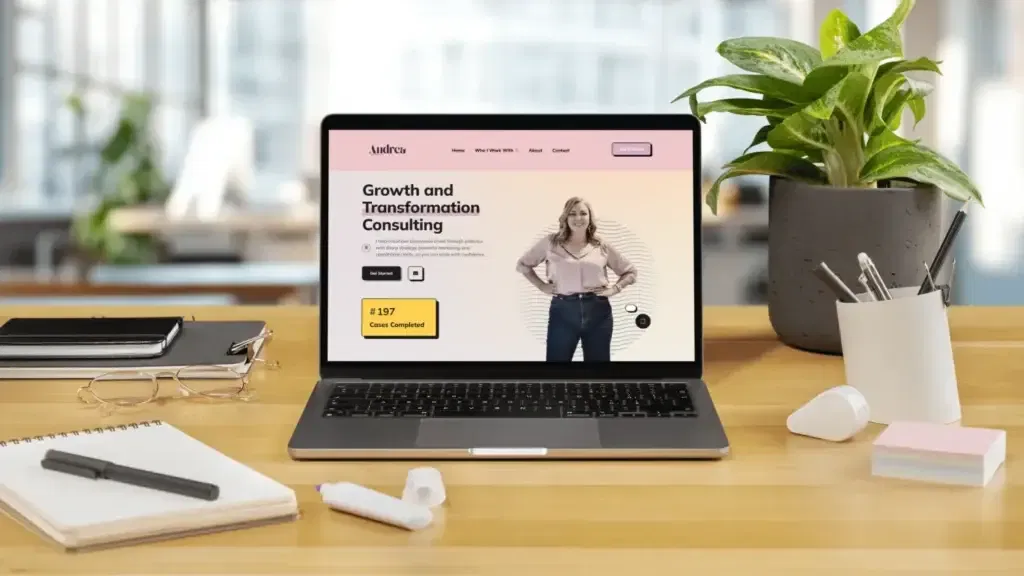
The hardest part of any website isn't the code or the color picker — it's the blank canvas. A cursor blinking on an empty artboard is where hours quietly disappear. AI design tools can break that stall in seconds, but only if you brief them well. Give a vague prompt and you get generic, forgettable output. Give a precise one and you get a genuine head start that still looks unmistakably like your brand.
Here's how to prompt AI as a website designer — plus the 100-prompt library, organized the way you actually build a site.
The anatomy of a website design prompt
Every strong prompt names six things: the page or section, the goal, the brand palette and type, the mood, the audience, and the single deliverable you want back. Bake your palette, fonts, and voice into a reusable template once, and every prompt starts on-brand instead of average.
The 100 prompts, by build phase
- Discovery & structure — sitemaps, information architecture, user flows, and page goals before a pixel is drawn.
- Hero & above-the-fold — headline, subhead, and CTA variations that state who you help in five seconds.
- Section layouts — services, about, proof, pricing, and FAQ blocks that guide the eye and the decision.
- Microcopy & UX writing — buttons, form labels, empty states, error messages, and 404 pages with personality.
- Visual system — palette explorations, type pairings, iconography direction, and imagery briefs.
- Conversion & accessibility — CTA placement, contrast checks, alt-text drafts, and mobile-first refinements.
Save the winners. Every prompt that returns something genuinely on-brand goes into your library, so you're building the web half of a reusable AI toolkit — not starting cold each project.
Direct the machine, don't outsource your taste
AI is a brilliant intern and a terrible art director. It generates options fast; you decide which one is right. Keep the strategic calls — positioning, hierarchy, what to cut — firmly human, the same boundary behind using AI without losing your brand voice. The taste is the value; the prompts just get you to it faster.
A great prompt is a design brief. The more precisely you brief the machine, the more the result sounds — and looks — like you.
Keep every prompt on-brand
Speed without sameness is the whole game. Anchor each prompt to your documented palette, type, and voice so volume never dilutes identity — exactly what AI-ready brand guidelines protect. For graphics and social alongside your site, pair this with our 50+ graphic design prompts for founders and prompts tuned for high-converting visuals.
From prompts to a site that converts
Prompts accelerate the making; strategy decides what's worth making. When your positioning is sharp and your brand is documented, AI becomes a force multiplier instead of a sameness machine. Want your brand rules turned into prompt-ready templates and a site engineered to convert? See website design and AI integration & automation.
Request a Strategy Conversation and we'll map the fastest path from where your brand is now to where it needs to be.
Frequently asked questions
How do I write AI prompts for website design?
Name the page or section, the goal, the brand palette and type, the mood, and the audience — then ask for one clear deliverable. "Hero section for a premium coaching site, cream and aubergine palette, serif headline, one CTA, calm and confident" beats "design a homepage." Specificity is what turns AI from a slot machine into a design partner.
Can AI actually help with website UX, not just visuals?
Yes. Beyond layouts, prompt AI for information architecture, user flows, microcopy, empty states, and accessibility checks. It is excellent for generating options and pressure-testing structure fast, while you keep the strategic and taste-level decisions that make a site convert.
Will AI-designed websites all look the same?
Only if you feed generic prompts. Anchor every prompt to your documented brand — palette, typography, voice, and real content — and AI produces work that looks like you, not the template average. Left undirected, it reverts to the internet mean; briefed well, it amplifies your identity.
Let’s turn this into results for your brand.
We build brands backwards — strategy and buyer psychology first — so your brand doesn’t just look good, it works hard and generates revenue.